
Yes, you can learn keyboard online effectively if you follow a clear plan, practice regularly, and get proper guidance. A structured approach with steady practice and timely feedback helps beginners improve faster and build strong skills from home.
Contents
- 1 Why Online Keyboard Learning Works
- 2 Why Some People Struggle to Learn Keyboard Online
- 3 How to Learn Keyboard Online Effectively
- 4 How Long It Takes and What to Expect
- 4.1 Beginner Stage (First 1–2 Months)
- 4.2 Intermediate Stage (3–6 Months)
- 4.3 Advanced Stage (6 Months and Beyond)
- 4.4 What Really Affects Your Progress
- 4.5 Staying Motivated Throughout the Journey
- 4.6 Final Thoughts
- 4.7 FAQs
- 4.8 Can beginners start learning keyboard online?
- 4.9 How much time should I practice daily?
- 4.10 Do I need guidance while learning?
- 4.11 Why does my keyboard practice feel slow?
- 4.12 Is it okay to learn at an older age?
- 4.13 What is the best way to stay consistent?
- 4.14 Can I learn keyboard online without feeling confused?
- 4.15 What makes online keyboard learning easier for beginners?
- 4.16 How do I stay consistent while learning keyboard at home?
- 4.17 Is it possible to learn keyboard online without musical background?
- 4.18 Why do some learners improve faster than others?
- 4.19 How can I avoid bad habits while learning keyboard online?
- 4.20 Can kids learn keyboard online effectively?
- 4.21 What is the best way to practice keyboard daily?
- 4.22 Do I need personal guidance to learn keyboard online?
- 4.23 How long does it take to feel confident in playing keyboard?
Why Online Keyboard Learning Works
Learning at Your Own Pace Makes a Big Difference
One of the biggest reasons people succeed with online learning is flexibility. You are not forced to keep up with a class or wait for others to catch up. You move forward when you are ready.
For beginners, this matters a lot. Some concepts feel easy, while others take time. When you control the pace, you understand things better.
You can repeat lessons as many times as needed. You can slow down when something feels difficult. You can also spend more time practicing without feeling rushed.
This freedom helps build confidence. Instead of feeling stressed, you feel in control of your learning journey.
A Comfortable Environment Improves Focus
Learning music requires attention. Small details like finger placement and timing matter. When you are comfortable, you can focus better on these details.
At home, you can:
- Sit in a relaxed position
- Practice without distractions
- Take breaks when needed
This creates a positive learning experience. You are more likely to enjoy your practice sessions, which leads to better consistency.
Access to Organized Learning Materials
Online learning gives you access to a wide range of resources. But the key is not just access it is organization.
When lessons are structured properly, you know exactly what to do next. You don’t waste time searching or guessing.
You move from:
- Basic notes
- To simple exercises
- To easy songs
This step-by-step flow helps you build skills naturally.
Many learners who learn keyboard online successfully follow this kind of structured path rather than jumping between random lessons.
Repetition Becomes Easier
In traditional learning, you may not always get the chance to repeat a lesson multiple times. Online, repetition is simple.
You can:
- Revisit older lessons
- Practice difficult sections again
- Strengthen weak areas
Repetition is one of the most powerful ways to improve in music. It builds muscle memory and confidence over time.
Why Some People Struggle to Learn Keyboard Online
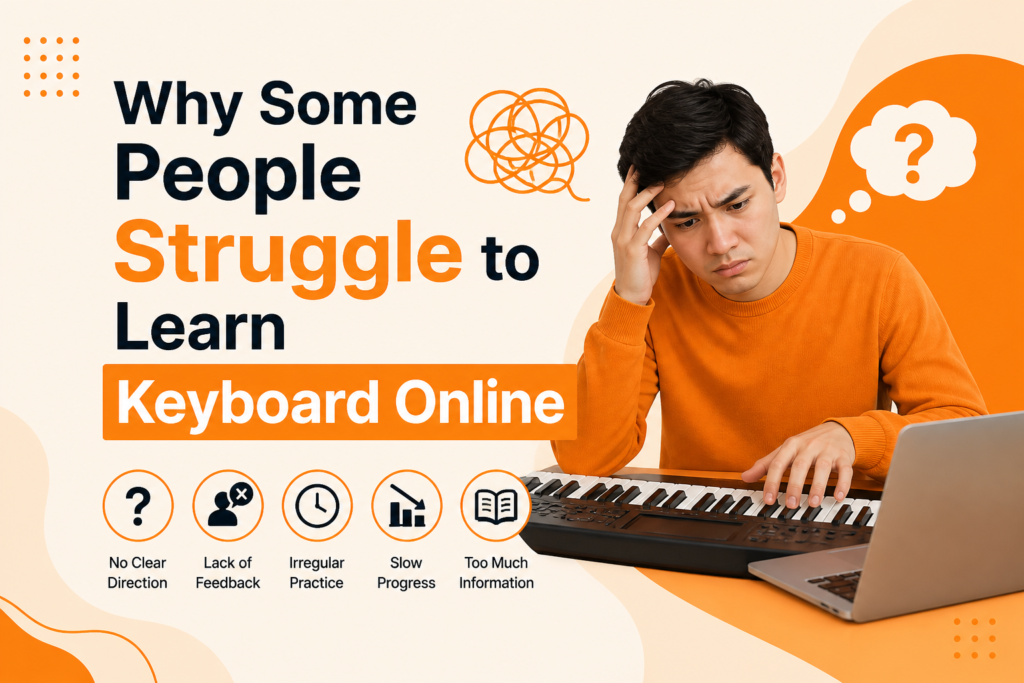
Lack of Direction Slows Progress
Many beginners start with excitement but soon feel lost. This usually happens when there is no clear plan.
They try different videos or lessons without a sequence. As a result, they don’t know:
- What comes next
- What they should practice
- Whether they are improving
A simple, guided path like the one followed in structured learning setups such as Peppy Notes can help avoid this confusion and keep progress steady.
Small Mistakes Go Unnoticed
When learning alone, it is easy to miss small errors. These errors may seem minor at first, but they can affect your playing later.
Common mistakes include:
- Incorrect finger positioning
- Playing with uneven rhythm
- Pressing keys too hard or too softly
Without correction, these habits become difficult to change.
That is why feedback, even occasional, is valuable. It helps you stay on the right path.
Inconsistent Practice Creates Gaps
Consistency is more important than long practice sessions.
Some learners practice for hours one day and then skip several days. This breaks the learning flow.
Instead, short daily practice works better. It keeps your mind and fingers active.
Even 20 minutes every day can lead to strong progress over time.
Too Much Information Causes Confusion
The internet has endless content. While this is helpful, it can also overwhelm beginners.
Trying to learn everything at once leads to confusion. You may feel like you are not improving, even when you are putting in effort.
The solution is simple: focus on one path and follow it step by step.
How to Learn Keyboard Online Effectively
Start with Strong Basics
The foundation of keyboard learning is simple but very important.
You should begin with:
- Notes (A to G)
- Finger numbers
- Proper hand position
These basics may seem small, but they affect everything you learn later.
Skipping them often leads to frustration.
Build a Simple Daily Routine
A routine helps you stay consistent. It removes the need to decide what to do each day.
A beginner-friendly routine can look like this:
- 5–10 minutes: Warm-up
- 10 minutes: Basic exercises
- 10–15 minutes: Practice a simple song
This structure keeps your practice balanced.
Focus on Accuracy Before Speed
Many beginners try to play fast too soon. This leads to mistakes and poor technique.
Instead:
- Play slowly
- Focus on correct notes
- Maintain steady rhythm
Speed will improve naturally once your accuracy is strong.
Train Both Hands Early
Using both hands may feel difficult at first. But starting early makes it easier over time.
Practice simple exercises that involve both hands. This improves coordination and control.
Avoid depending on just one hand. Balanced practice leads to better results.
Pay Attention to Rhythm and Timing
Music is not just about playing the right notes. It is also about playing them at the right time.
If your timing is not steady, even correct notes may not sound good. That’s why rhythm is an important part of learning keyboard.
One simple way to improve your timing is by practicing with a metronome. You can try this free tool:
https://www.musicca.com/metronome
Start slow and match your playing with the beat. As you improve, you can gradually increase your speed.
Practicing this way helps you develop better control, smoother playing, and more confidence over time.
Break Down Difficult Parts
When a song feels hard, do not try to play it all at once.
Instead:
- Divide it into small sections
- Practice each section slowly
- Combine them gradually
This method makes learning easier and less stressful.
Review and Repeat Regularly
Do not forget older lessons. Reviewing them strengthens your skills.
You can:
- Revisit basic exercises
- Replay earlier songs
- Improve weak areas
This keeps your learning strong and stable.
Seek Guidance When Needed
Sometimes, learning alone can feel unclear. Getting guidance helps you correct mistakes and move forward with confidence.
Even simple guidance like what learners experience in structured environments such as Peppy Notes can make learning feel more natural and less confusing.
How Long It Takes and What to Expect
Beginner Stage (First 1–2 Months)
At this stage, you focus on understanding basics.
You will learn:
- Notes and finger positions
- Simple exercises
- Easy melodies
Progress may feel slow, but this stage is very important.
Intermediate Stage (3–6 Months)
Your confidence begins to grow.
You will:
- Use both hands together
- Improve rhythm
- Play simple songs smoothly
This stage feels more enjoyable because you start hearing real music.
Advanced Stage (6 Months and Beyond)
You gain better control and expression.
You can:
- Play more complex songs
- Improve speed and accuracy
- Develop your own style
Learning continues, but you feel more comfortable with the instrument.
What Really Affects Your Progress
The time it takes depends on a few key factors:
- Consistency
- Quality of practice
- Clarity of learning path
Even someone practicing 20 minutes daily can progress faster than someone practicing irregularly for longer hours.
Staying Motivated Throughout the Journey
Learning music is a long-term process. Staying motivated is important.
You can stay motivated by:
- Playing songs you enjoy
- Tracking your progress
- Celebrating small improvements
Enjoying the process matters more than rushing results.
Final Thoughts
So, can you learn keyboard online effectively?
Yes, you can.
With the right approach, learning from home can be simple and rewarding. The key is to stay consistent, follow a clear path, and focus on steady improvement.
Many learners find that combining self-practice with a structured method similar to approaches used in places like Peppy Notes helps them stay on track and build confidence over time.
FAQs
Can beginners start learning keyboard online?
Yes. Beginners can start from the basics and improve step by step with regular practice.
How much time should I practice daily?
Practicing 20–30 minutes every day is enough for steady progress.
Do I need guidance while learning?
Guidance is helpful because it corrects mistakes early and keeps your learning on track.
Why does my keyboard practice feel slow?
Slow progress can happen due to irregular practice, lack of structure, or trying to learn too many things at once.
Is it okay to learn at an older age?
Yes. People of all ages can learn and enjoy playing the keyboard.
What is the best way to stay consistent?
Create a simple routine and practice daily, even for a short time.
Can I learn keyboard online without feeling confused?
Yes, you can learn keyboard online without confusion if you follow a simple and structured path. Learning step by step helps you understand concepts clearly instead of jumping between random lessons.
What makes online keyboard learning easier for beginners?
Beginners find it easier when lessons are simple, guided, and focused on basics first. A calm and supportive learning style—like what learners often experience in setups such as PeppyNotes—can make the process feel more comfortable.
How do I stay consistent while learning keyboard at home?
Consistency comes from having a routine. Even short daily practice works well. When learning feels guided and manageable, it becomes easier to stay regular.
Is it possible to learn keyboard online without musical background?
Yes, many people learn keyboard online without any prior music knowledge. Starting from basics and progressing slowly helps build confidence over time.
Why do some learners improve faster than others?
Progress depends on practice, clarity, and guidance. Learners who follow a structured approach—similar to methods used in places like PeppyNotes—often improve more steadily.
How can I avoid bad habits while learning keyboard online?
Focus on correct technique from the beginning. Pay attention to finger placement and timing. Occasional guidance can help you correct small mistakes early.
Can kids learn keyboard online effectively?
Yes, kids can learn keyboard online when lessons are simple, engaging, and paced correctly. A patient teaching style helps them stay interested and enjoy learning.
What is the best way to practice keyboard daily?
Keep it simple. Start with warm-ups, practice basic exercises, and then play a small part of a song. Regular and focused practice leads to better improvement.
Do I need personal guidance to learn keyboard online?
Not always, but guidance can make learning smoother. Many learners feel more confident when they have some level of support, like the kind offered in structured environments such as Peppy Notes.
How long does it take to feel confident in playing keyboard?
It depends on your consistency. Most learners who practice regularly and follow a clear path while they learn keyboard online start feeling comfortable within a few months.