
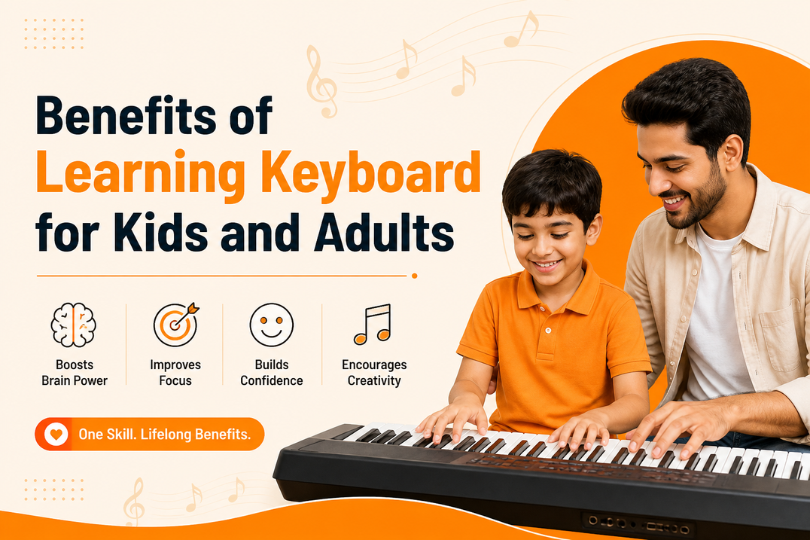
The benefits of learning keyboard include better memory, stronger focus, improved creativity, and reduced stress. Kids gain academic and developmental skills, while adults enjoy mental relaxation, brain fitness, and a rewarding hobby.
Contents
- 1 Why Learning Keyboard Is Valuable for Everyone
- 2 Benefits of Learning Keyboard for Kids
- 3 Benefits of Learning Keyboard for Adults
- 4 Long-Term Impact of Learning Keyboard
- 5 Additional Benefits of Learning Keyboard for Brain Development
- 6 Conclusion
- 6.1 FAQs
- 6.2 1. What are the main benefits of learning keyboard?
- 6.3 2. Is keyboard good for brain development?
- 6.4 3. Can adults learn keyboard easily?
- 6.5 4. How long does it take to learn keyboard?
- 6.6 5. Is keyboard better than piano for beginners?
- 6.7 6. Does learning keyboard improve IQ?
- 6.8 7. How often should I practice keyboard?
- 6.9 8. Can kids learn keyboard online?
- 6.10 9. Do I need music knowledge to start?
- 6.11 10. Is keyboard a good hobby?
- 6.12 Final Takeaway
Why Learning Keyboard Is Valuable for Everyone
Learning the keyboard is one of the simplest ways to start your musical journey. If you are not sure where to begin, you can explore our online keyboard classes to understand how structured lessons work. It suits both kids and adults because it is easy to understand and does not require physical strength.
Each key is clearly arranged, so beginners can quickly learn notes and play simple songs. Unlike many instruments, the keyboard allows you to see patterns clearly, which helps in faster learning.
Another reason why keyboard stands out is its flexibility. You can play different styles like classical, film music, pop, or devotional songs. This makes the learning journey interesting and engaging.
Most importantly, learning keyboard is not just about music. It builds life skills that stay useful in everyday activities.
Benefits of Learning Keyboard for Kids
Learning keyboard at a young age helps children grow in many ways beyond music.
Improves Memory and Brain Development
When kids learn notes and songs, they train their brain to remember patterns. This improves both memory and thinking ability.
Increases Focus and Attention
Playing the keyboard requires concentration. Kids learn to stay focused for longer periods, which also helps in studies.
Supports School Learning
Music connects with subjects like math and language. Counting beats improves math skills, while reading notes improves understanding of symbols.
Builds Discipline and Routine
Regular practice teaches children the importance of consistency. They learn that progress comes with daily effort.
Boosts Creativity
Kids can explore sounds and create their own tunes. This helps them think in new and creative ways.
Improves Coordination
Playing with both hands improves hand-eye coordination and motor skills.
Increases Confidence
When children play a song successfully, they feel proud. Performing in front of others also builds confidence.
Benefits of Learning Keyboard for Adults
Adults often think learning music is difficult, but keyboard makes it simple and enjoyable.
Reduces Stress and Improves Mood
Playing music helps the mind relax. It reduces stress and gives a sense of calm after a busy day.
Keeps the Brain Active
Learning new skills keeps the brain sharp. It improves memory and slows mental decline.
Improves Focus and Patience
Practicing keyboard requires attention. This helps adults become more focused and patient in daily life.
Provides a Creative Outlet
Keyboard allows adults to express emotions through music. It becomes a personal space for creativity.
Builds a New Skill
Learning something new gives a sense of achievement. It keeps life exciting and meaningful.
Encourages Social Connection
Music brings people together. Adults can play with friends or join groups, creating new connections.
Long-Term Impact of Learning Keyboard
The benefits of learning keyboard continue for a lifetime. It is not just a short-term skill but a lifelong advantage.
Lifelong Learning and Enjoyment
Once you learn the basics, you can play anytime. It becomes a source of joy and relaxation.
Better Mental Health
Regular playing reduces anxiety and improves emotional balance.
Stronger Discipline and Consistency
The habit of practice builds a disciplined mindset that helps in other areas of life.
Opportunity for Growth
With time, keyboard skills can grow into advanced learning, performances, or even teaching.
Personal Satisfaction
Playing your favorite songs gives a deep sense of happiness and achievement.
Additional Benefits of Learning Keyboard for Brain Development
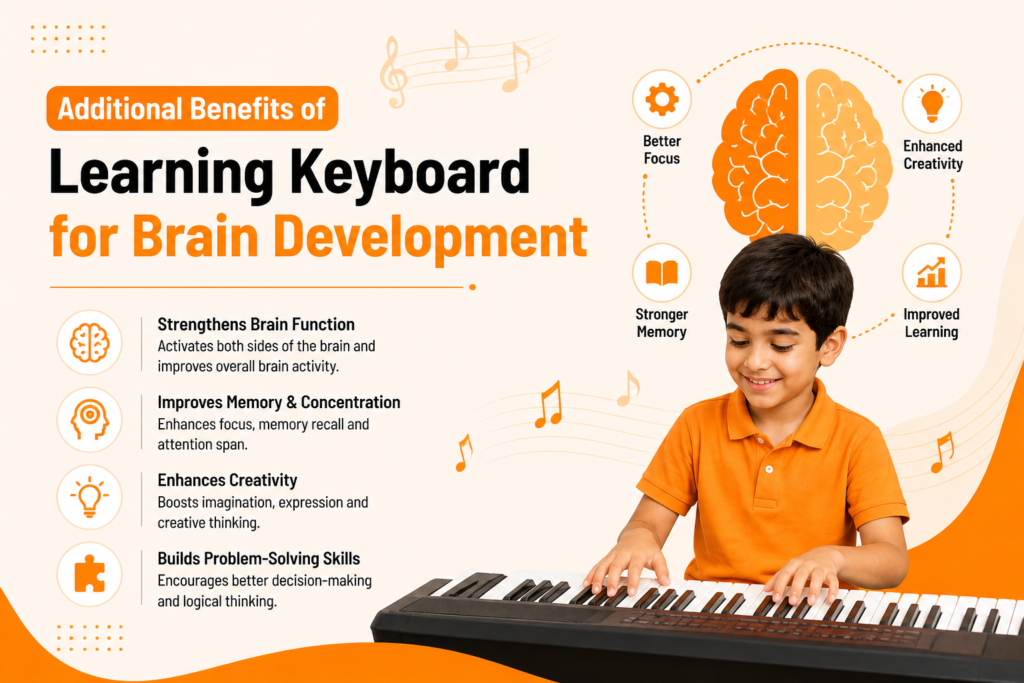
One of the most powerful benefits of learning keyboard is how it strengthens overall brain function (https://www.sciencedaily.com/releases/2022/12/221202124841.htm). Playing the keyboard uses both sides of the brain at the same time. The left side handles logic and rhythm, while the right side focuses on creativity and expression. This balanced brain activity improves thinking speed, decision-making, and problem-solving skills in both kids and adults.
Over time, regular keyboard practice helps build strong neural connections. This means faster learning, better memory recall, and improved concentration in daily tasks. These cognitive benefits are especially useful for students and working professionals who need mental clarity and focus.professionals who need mental clarity and focus.
Emotional and Mental Benefits of Learning Keyboard
Another key benefit of learning keyboard is emotional well-being. Music has a direct impact on how we feel. Playing the keyboard helps release stress and creates a sense of calm. It allows people to express emotions without needing words, which is very helpful during difficult or busy times.
For both kids and adults, keyboard practice can become a peaceful daily habit. It improves mood, reduces anxiety, and builds a positive mindset. Over time, this emotional balance leads to better confidence, improved self-control, and a healthier mental state.
Conclusion
The benefits of learning keyboard are powerful for both kids and adults. It improves the brain, builds confidence, reduces stress, and develops creativity.
For kids, it supports growth and learning. For adults, it brings peace and mental strength. It is one of the few activities that combines fun with personal development.
Starting keyboard is simple, and the rewards last for life.
FAQs
1. What are the main benefits of learning keyboard?
It improves memory, focus, creativity, and reduces stress. It also builds confidence and discipline.
2. Is keyboard good for brain development?
Yes. It strengthens memory, concentration, and problem-solving skills.
3. Can adults learn keyboard easily?
Yes. Adults can learn keyboard at any age with regular practice.
4. How long does it take to learn keyboard?
Basic skills can be learned in 2–3 months with consistent practice.
5. Is keyboard better than piano for beginners?
Yes. Keyboard is more flexible and easier to start with.
6. Does learning keyboard improve IQ?
It can improve cognitive abilities like memory and logical thinking.
7. How often should I practice keyboard?
Practice at least 15–30 minutes daily for best results.
8. Can kids learn keyboard online?
Yes. Online classes make learning easy and flexible.
9. Do I need music knowledge to start?
No. Beginners can start without any prior knowledge.
10. Is keyboard a good hobby?
Yes. It is fun, relaxing, and beneficial for mental health.
Final Takeaway
Learning keyboard is a simple step that brings big benefits. It strengthens the mind, improves life skills, and gives lasting happiness for both kids and adults.